
The origins of this grape variety—considered one of Romania’s most important and representative native grapes—are still uncertain. Many oenologists believe it to be an ancient, historic variety dating back to the Dacian era. Some suggest it first appeared in the northern part of Romania, in an area associated with the historical region of Moldova, which once included not only today’s Republic of Moldova but also the Romanian region of Moldova and part of present-day Ukraine.
For years, Fetească Neagră was thought to be a genetic mutation of its white counterpart, Fetească Albă. Others suggested the opposite. Recent studies, however, have ruled out this connection, confirming instead the grape’s long history and linking it more closely to a natural selection of wild vines.
This conclusion reinforces the idea that its roots lie deep within the territory of ancient Dacia—an area renowned in antiquity for its wine culture. Figures such as King Burebista (82 BC – 44 BC), one of Dacia’s most prominent rulers, and later the Roman emperors Domitian and Trajan during the Dacian Wars, are all historically tied to wine production in this remarkable corner of Eastern Europe.

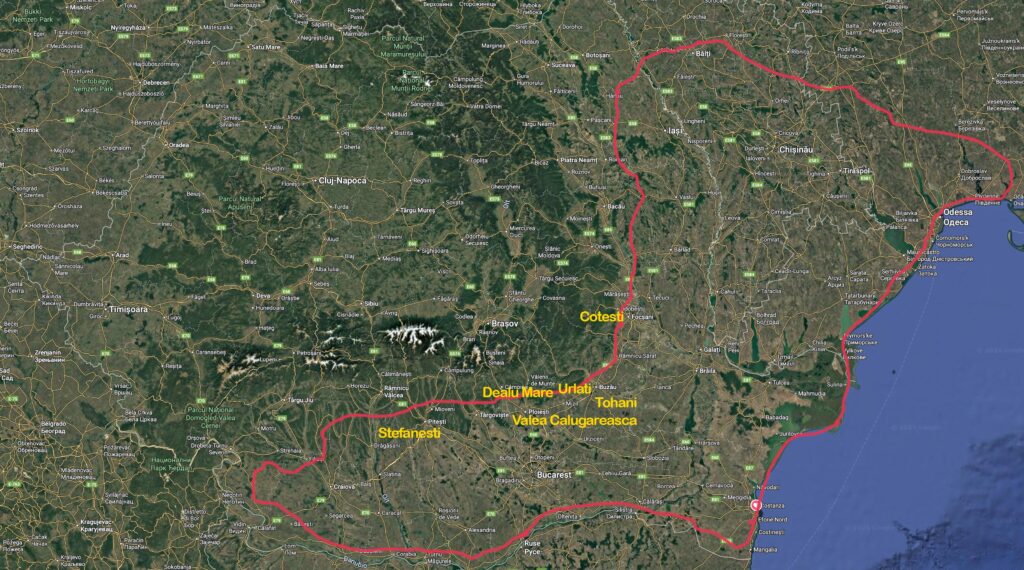
It is widely believed that Fetească Neagră originated—based on historical relevance—in central Romania, in the Vrancea wine region, and that it later spread to areas such as Galați, Vaslui, and throughout the territories stretching from Dealu Mare to Ștefănești in Argeș, in the region of Muntenia. It is also particularly significant in the wine districts of Valea Călugărească, Urlați, Tohani, and Cotești.
Today, the variety is grown across Romania and neighbouring countries, though it has rarely crossed borders to be cultivated abroad (despite being well deserving of international attention). The vine is hardy, tolerant of both cold temperatures and drought, and its late ripening and thick skins give the wines a high concentration of anthocyanins, depth, and aromatic elegance.
The name “Fetească Neagră” translates as “Black Maiden,” belonging to the broader “Fetească” family, which includes the white Fetească Albă, the crossbred Fetească Regală, and of course Fetească Neagră itself.
Over time, the grape has been known by various synonyms: Coada Răndunicii, Coada Rândunicei, Păsărească, Păsărească Neagră, Poamă Fetei Neagră, Poama Rândunicii, Schwarze Mädchentraube (Moldova, Romania); Feteasca Chernaya and Pasaryanska Chernaya (Russia); Fetyaska Chernaya (Ukraine); Fetyaska Black. These names reflect its spread across the region.
The grape clusters are medium to large, often with two wings, and the berries are medium-sized, round, densely packed, violet-hued, and generously covered in bloom. The vine requires little fertilisation (about 30% less than average) and thrives on sunny slopes, where it accumulates anthocyanins—although this often leaves the stems still green at harvest, requiring careful destemming and handling. It is a late-ripening variety, reaching maturity shortly before Merlot. Its growing cycle spans 160–170 days, and it accumulates high sugar levels in the must (230–240 g/l). Its naturally good acidity allows for both fresh wines and long-aging expressions.
Wines made from Fetească Neagră typically display a ruby-red colour and a complex aromatic profile dominated by fruit notes—dried plum, blackberry, sour cherry, and black cherry—alongside hints of dried herbs and light spices such as cinnamon, white pepper, clove, and vanilla bean. Aged versions may show subtle notes of bread crust and chocolate, adding refinement. On the palate, the wines are marked by lively acidity, fine and supple tannins, a medium body, and well-integrated alcohol, which tends to be fairly generous.
In the past, Fetească Neagră wines were often made with noticeable residual sugar and aged for extended periods in barriques, reflecting local tastes. In recent years, winemaking styles have evolved, earning strong international recognition. The wines now achieve outstanding quality, and the modern, innovative labels are aligned with global standards and preferences.
The 2025 Zosimo Wine Critic special edition dedicated to Romanian wines analysed more than 300 samples from across the country. Compared with the previous edition in 2023, the results show a remarkable improvement in quality, with many wines achieving high international ratings.
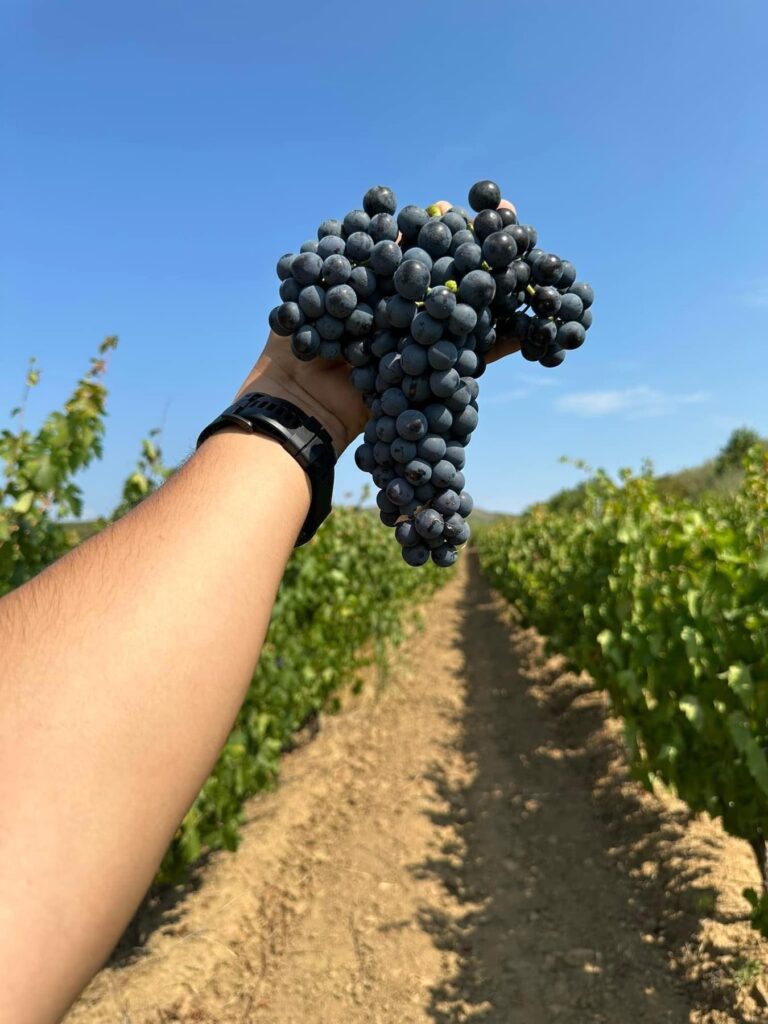
Image of a grapes of Feteasca Neagra from the Crama Bolgiu Winery – Urlati
The “Romanian Wines” Special aims to celebrate and promote native varieties, explore the country’s terroirs and history, and highlight its wineries.
Below is a preview of the 2025 Zosimo Wine Critic selection dedicated to the native grape Fetească Neagră

